
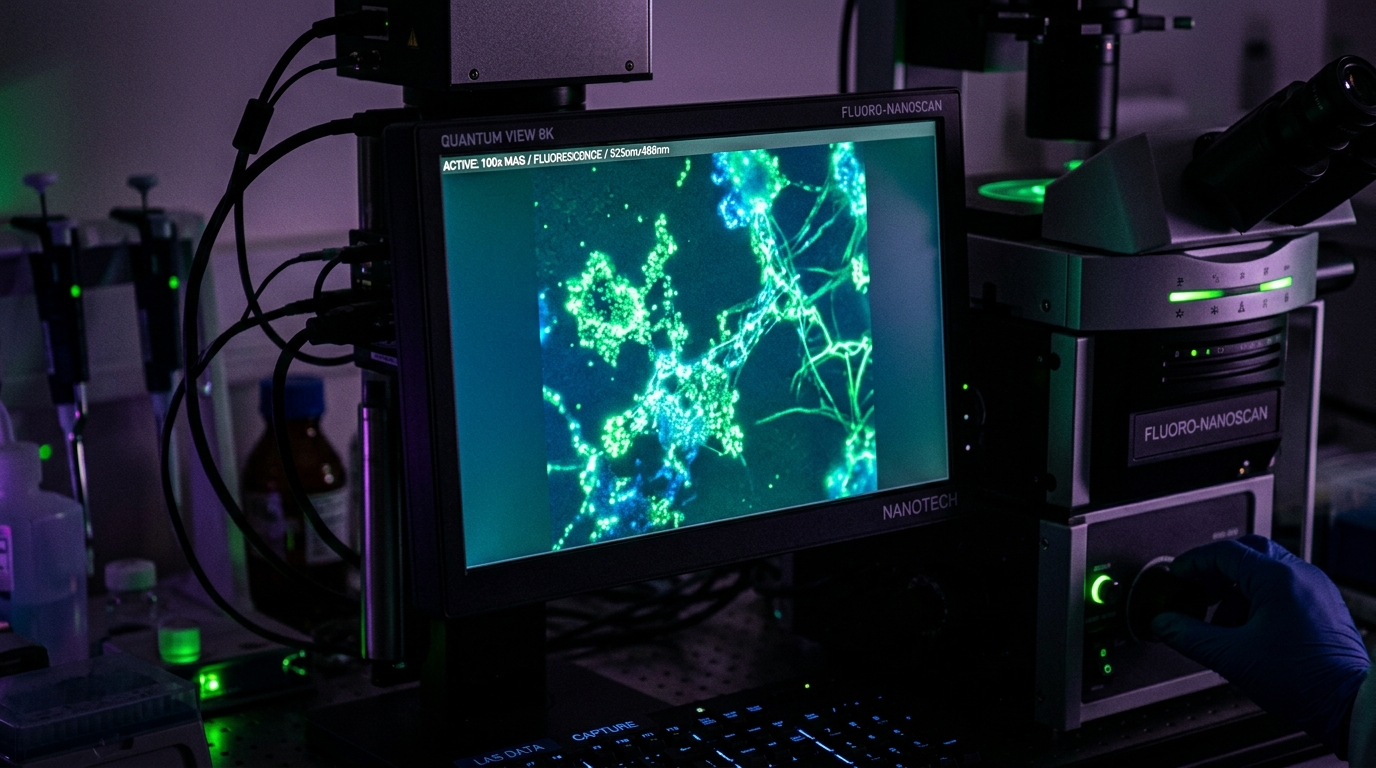
For more than two decades, cancer nanotechnology has relied primarily on passive targeting. The general assumption was that nanoparticles injected into the bloodstream would naturally accumulate in tumors due to their leaky blood vessels—a phenomenon known as the Enhanced Permeability and Retention (EPR) effect. However, clinical data in recent years has shown that the EPR effect in human patients is highly inconsistent. In mid-2026, the field of nanomedicine is undergoing a major evolution: the transition to **active, transformable smart nanoplatforms**.
Transforming on Site: The Nanofiber Lock
Rather than remaining in a static shape, next-generation nanoparticles are designed to be dynamic. Developed by leading research groups including teams at UC Davis, these smart nanoparticles are injected in an ultra-small, sphere-like shape (under 20 nm) allowing them to travel freely through blood vessels and penetrate deep into solid tumors.
Once they reach the specific chemical microenvironment of a tumor (characterized by low pH or specific enzymes), they undergo a physical transition:
- Morphological Transformation: The spherical nanoparticles automatically reassemble into a network of long nanofibers (a "nano-grid").
- Tumor Parking: This nanofiber grid becomes physically trapped inside the tumor stroma, preventing the therapeutic agents from washing away or leaking into healthy tissue.
- Targeted Drug Release: On-demand therapies are then delivered directly to the tumor cells using highly precise "click chemistry" or external triggers (like heat or light).
Comparative Evolution of Cancer Nanotechnology
| Generation | Targeting Mechanism | Structural Behavior | Key Limitation / Advantage |
|---|---|---|---|
| 1st Gen (Liposomes / Abraxane) | Passive accumulation (EPR effect) | Static spheres | Poor penetration in dense human tumors |
| 2nd Gen (Active Conjugates) | Ligand-receptor binding (targeting proteins) | Static spheres | High clearance rates by liver and spleen |
| 3rd Gen (Smart Nanotech - 2026) | Microenvironment-responsive triggers | Shape-shifting (spheres to fibers) | Indefinite tumor retention; near-zero systemic toxicity |
Clinical Integration and the Theranostic Shift
In addition to delivering therapeutic payloads, 2026's smart nanoparticles are increasingly serving as diagnostic tools, a hybrid discipline known as **theranostics**. By encapsulating imaging agents (like fluorescent dyes or magnetic cores) alongside chemotherapies, clinicians can monitor drug distribution and cellular uptake in real-time. This allows for highly personalized dosing, ensuring that chemotherapy, radiation, and immunotherapy are co-delivered only where they are needed, reducing systemic side effects like hair loss and organ strain.
Translational Outlook
While the laboratory results of transformable nanotechnology are outstanding, scaling up chemical synthesis remains a hurdle. Maintaining batch-to-batch consistency and navigating the regulatory pathways for multi-functional "combination" materials are the primary focus of development teams in late 2026. However, as the first clinical trials for smart nanofibers begin to report positive safety endpoints, nanomedicine is poised to redefine solid tumor oncology.