
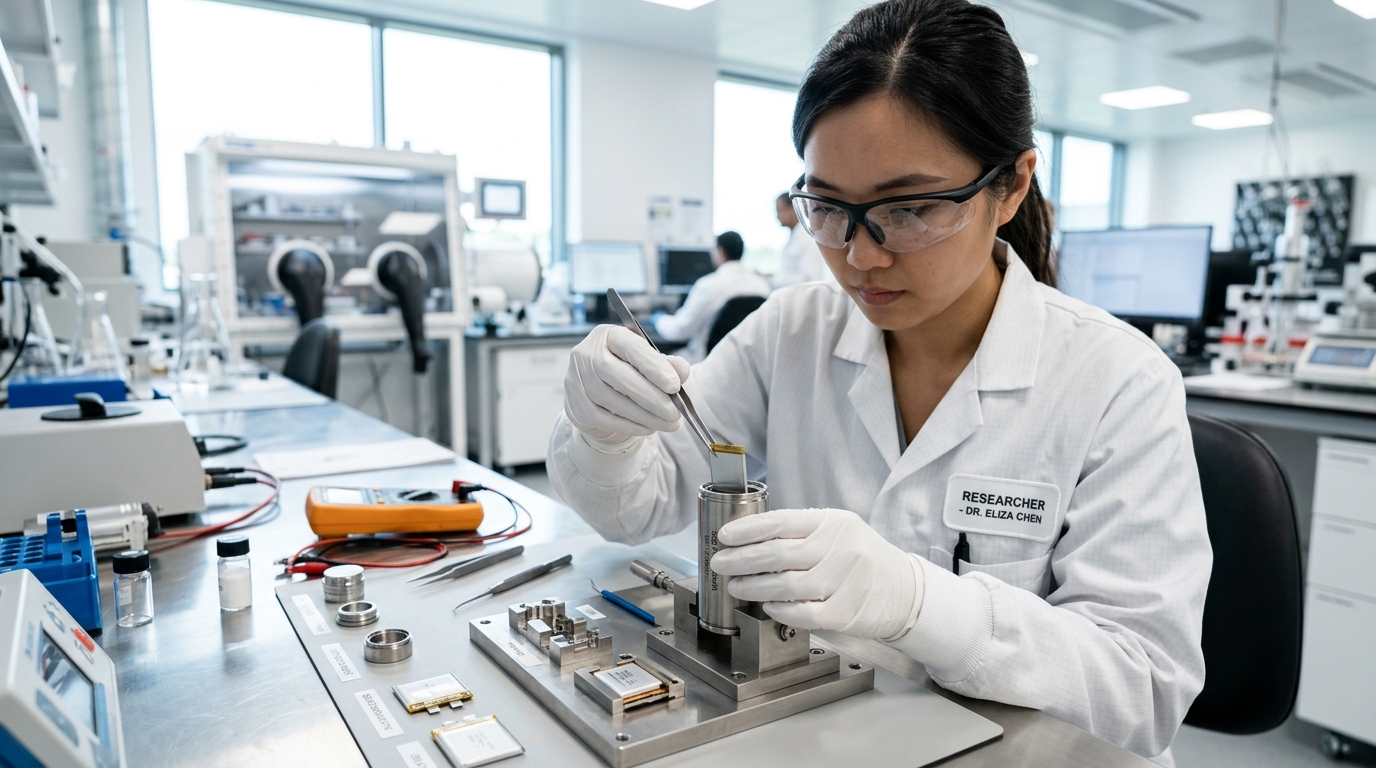
The energy density limitations of traditional lithium-ion batteries have long acted as a bottleneck for electric transportation, grid storage, and portable electronics. In 2026, the transition toward solid-state battery technology has graduated from research cleanrooms to active manufacturing lines.
Replacing Liquids with Solid Polymer Electrolytes
Unlike standard batteries that rely on flammable liquid solvents to shuttle lithium ions between electrodes, solid-state models utilize thin layers of solid polymer or ceramic materials. This architectural change provides significant benefits:
- Safety: Eliminates fire risk and thermal runaway.
- Density: Allows for pure lithium-metal anodes, boosting energy storage capability by up to 80%.
- Longevity: Maintains original charge capacities for over 1,500 full cycles.
Comparative Performance Matrix: Li-Ion vs. Solid-State
| Feature | Standard Lithium-Ion (2025) | Solid-State Battery (2026) |
|---|---|---|
| Energy Density | ~250-300 Wh/kg | ~500-550 Wh/kg |
| Charging Speed (10-80%) | ~25-40 minutes | ~8-12 minutes |
| Active Lifespan | ~800-1,000 cycles | ~1,500+ cycles |
| Flammability Risk | Medium (liquid organic solvent) | Negligible (solid barrier) |
Manufacturing Scale and Cost Reductions
The core challenge of solid-state batteries has always been scaling production without massive defects. In 2026, manufacturers are utilizing high-throughput web-coating techniques (similar to roll-to-roll printing) to deposit ceramic polymer layers onto thin substrates at high speeds. This has reduced production scrap rates from 20% down to under 3%, bringing the cost per kilowatt-hour close to parity with traditional lithium-ion cells. As automotive gigafactories retool their lines, we will see the first passenger vehicles delivering over 650 miles of range on a single 10-minute charge hit the roads by late 2026.