
For years, the robotics industry has struggled with a persistent bottleneck: the "Sim-to-Real" (Simulation-to-Reality) gap. Training physical robots in the real world is slow, expensive, and dangerous. However, training them in virtual environments often fails because virtual physics engines cannot capture the messy, unpredictable friction, weight distributions, and collision behaviors of the real world. When simulated models are transferred to physical hardware, they frequently fail.
The Breakthrough of 2026: Physics-First AI Engines
As we move through 2026, a new paradigm known as Physical AI has emerged. By combining massive generative AI models with real-time physics simulators—such as NVIDIA's Omniverse updates and ABB's next-generation robotics frameworks—engineers are finally closing the Sim-to-Real gap. These systems train neural networks inside ultra-realistic virtual twins, simulating millions of physical scenarios simultaneously. When deployed to a physical humanoid or robotic arm, the robot instantly adapts to its new environment with near-perfect reliability.
Key Drivers Behind the Physical AI Revolution
- Agentic Autonomy: Instead of executing hardcoded pre-programmed movements, robots are powered by agentic vision-language-action (VLA) models. They can interpret conversational instructions (e.g., "Sort the fragile items and place them on the conveyor") and execute the steps dynamically.
- Synthetic Data Scalability: Simulating physical interactions allows developers to generate infinite synthetic data, bypassing the bottleneck of collecting real-world sensor logs.
- Decentralized Learning: Robots connected to the cloud can share learnings in real-time. If a robot in a Munich plant learns a more efficient grasp trajectory, that intelligence is instantly pushed to sibling machines worldwide.
Real-World Impacts Across Industries
The industrial landscape is already feeling the transformation:
| Sector | Primary Application | Efficiency Gains (2026 Data) |
|---|---|---|
| Logistics & Warehousing | Humanoid order picking and sorting | +45% throughput |
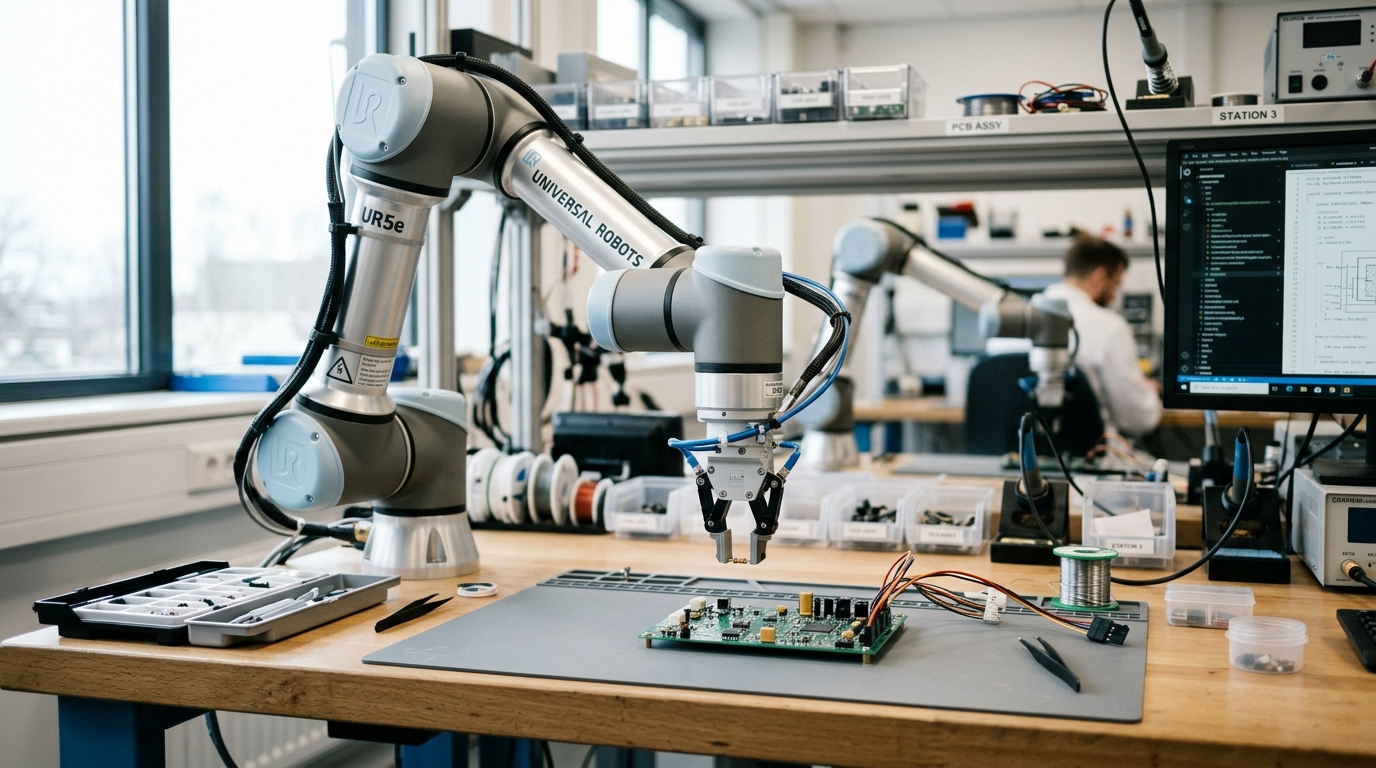
| Precision Electronics | Micro-assembly and micro-soldering | 99.98% defect-free rate |
| Healthcare & Medtech | Semi-autonomous surgical assistance | 30% reduction in prep times |
What Lies Ahead
The convergence of microtechnology (smaller, more sensitive MEMS sensors) and massive neural network scaling means robots are becoming more tactile. The next phase of Physical AI will focus on haptic intelligence, enabling robots to handle materials as delicate as soft tissue or micro-sensors with the same dexterity as human hands. For technology teams and businesses, the decision is no longer whether to automate, but how quickly they can integrate Physical AI models into their workflows.